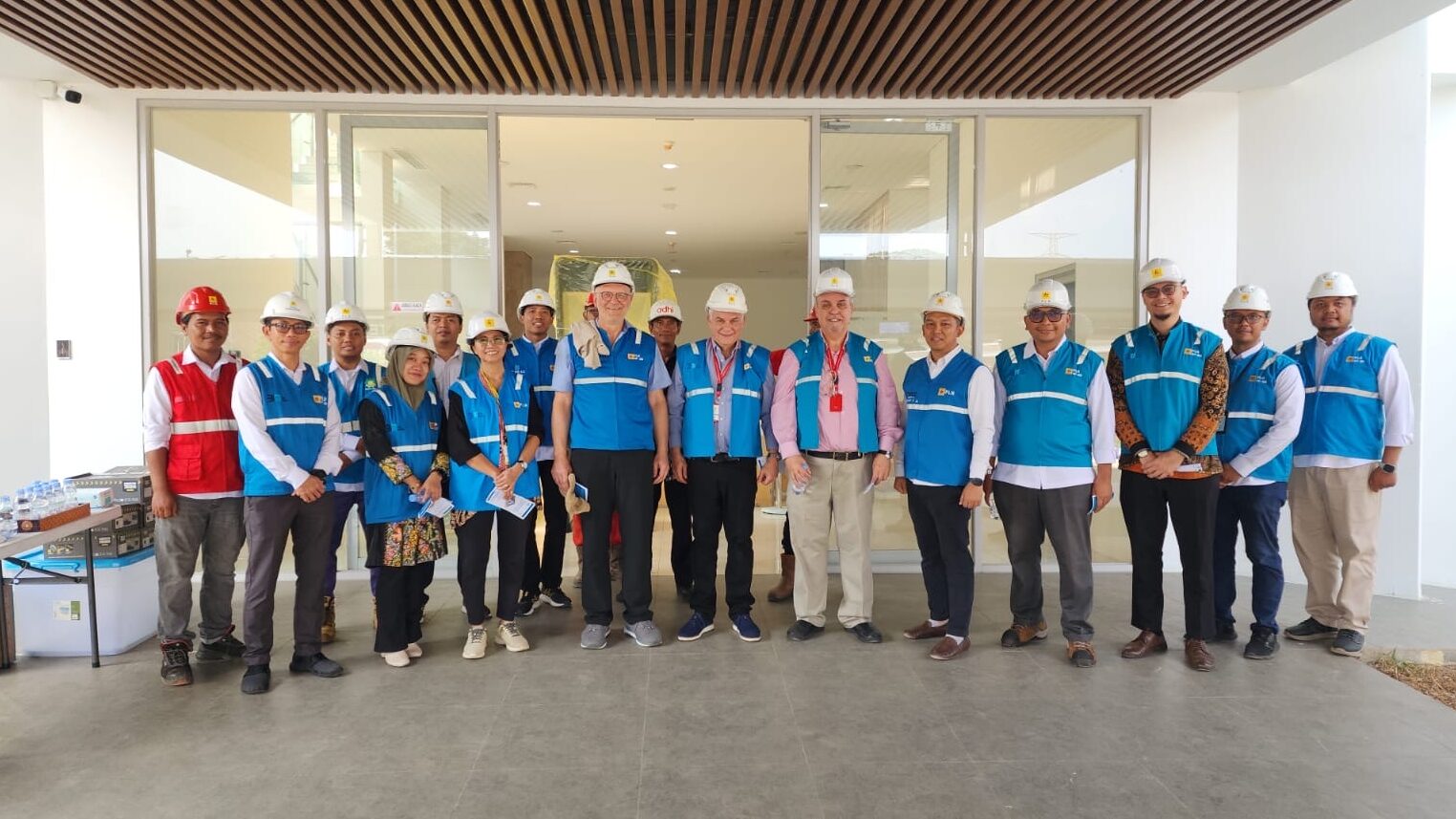
At the heart of Indonesia’s journey toward a sustainable future lies a partnership built on trust, transparency, high technical standards and a shared vision. For over 3 years, the Southeast Asia Energy Transition Partnership (ETP) and PLN have worked side-by-side, moving beyond simple infrastructure upgrades to fundamentally reshape the nation’s energy landscape.

As we enter a milestone mark, through the signing of ETP’s partnership agreement with PLN this year, this bears an opportune moment for reflection about the journey together, which began tackling the backbone of Indonesia’s power supply: the JAMALI Grid.

Modernizing the JAMALI Grid
To integrate variable renewable energy (VRE) at scale, a grid must be more than just functional; it must be intelligent and resilient. When we first joined forces with PLN, the JAMALI Control Center faced significant hurdles:
- Aging infrastructure, resulting in systems which were slow to recover after disturbances.
- Capacity limits, which meant that database and forecasting tools couldn’t keep up with modern demands.
- Stability gaps due to a lack of grid analysis for voltage stability created bottlenecks for renewable adoption.
Recognizing these challenges, ETP provided the essential technical roadmap. We delivered the Detailed Engineering Design for the JAMALI Main Control Center and spearheaded the consolidation of five regional centers into a single, unified Disaster Recovery Control Center. This wasn’t just a technical fix; it was a strategic overhaul to ensure a future-ready power system for millions.

Beyond Technology: Investing in Human Capital
As our partnership progressed, it was evident that the energy transition requires more than just better hardware; it requires a workforce ready to lead. Our partnership evolved from engineering solutions to Business and Change Management.
“The partnership between UNOPS and PT PLN represents a strategic alliance aimed at accelerating Indonesia’s energy transition through collaborative studies and technical support. By focusing on coal-fired power plant transitions and grid optimisation, this agreement highlights the need to combine international expertise with local operational knowledge. The success of this partnership depends on strong human capital development, including joint capacity building and knowledge sharing, to achieve a just and orderly energy transition.” –Kamia Handayani, EVP Energy Transition and Sustainability PT PLN (Persero)
We are currently collaborating with PLN to build a Center of Excellence, ensuring that the transition is sustainable from the inside out. By equipping staff (from technicians to top-tier executives) with the right tools, we are fostering a culture of innovation.
Our focus areas include:
- Comprehensive training in energy transition topics to navigate the complexities of renewable integration.
- Providing Strategic Change Management Skills to manage the organizational shifts required for a Net-Zero future.
- Directly supporting Indonesia’s ambitious climate goals through specialized leadership development.
Delivering Lasting Change
The impact of this long-term collaboration is already being felt across the community. A more resilient grid means fewer disruptions for businesses and homes, while a highly skilled workforce ensures that Indonesia remains a leader in the regional energy transition.
“This partnership marks a powerful and forward-looking alliance to accelerate Indonesia’s energy transition through tangible, high-impact actions. By combining PLN’s national mandate and on-the-ground capabilities with UNOPS’ global expertise and best practices, we are translating strategic ambition into practical, scalable solutions that are sustainable, inclusive, and future-ready.” – Evi Haryadi Chief of Technology, Engineering and Sustainability, PT PLN (Persero)
Looking Ahead
At ETP, we are proud of the enduring bond we have built with PLN. By combining technical innovation with workforce empowerment, we aren’t just planning for a clean energy future; we are building it.
The journey from the JAMALI grid upgrades to the establishment of a Center of Excellence proves that when international expertise meets national ambition, the results are powerful, resilient, and inclusive.