Every year, International Day of Women in Engineering is celebrated in June, drawing global recognition towards the remarkable contributions made by women in the field. Although women represent only a fraction of the global engineering workforce they play a critical role in shaping safer, more sustainable infrastructure and communities across the world.
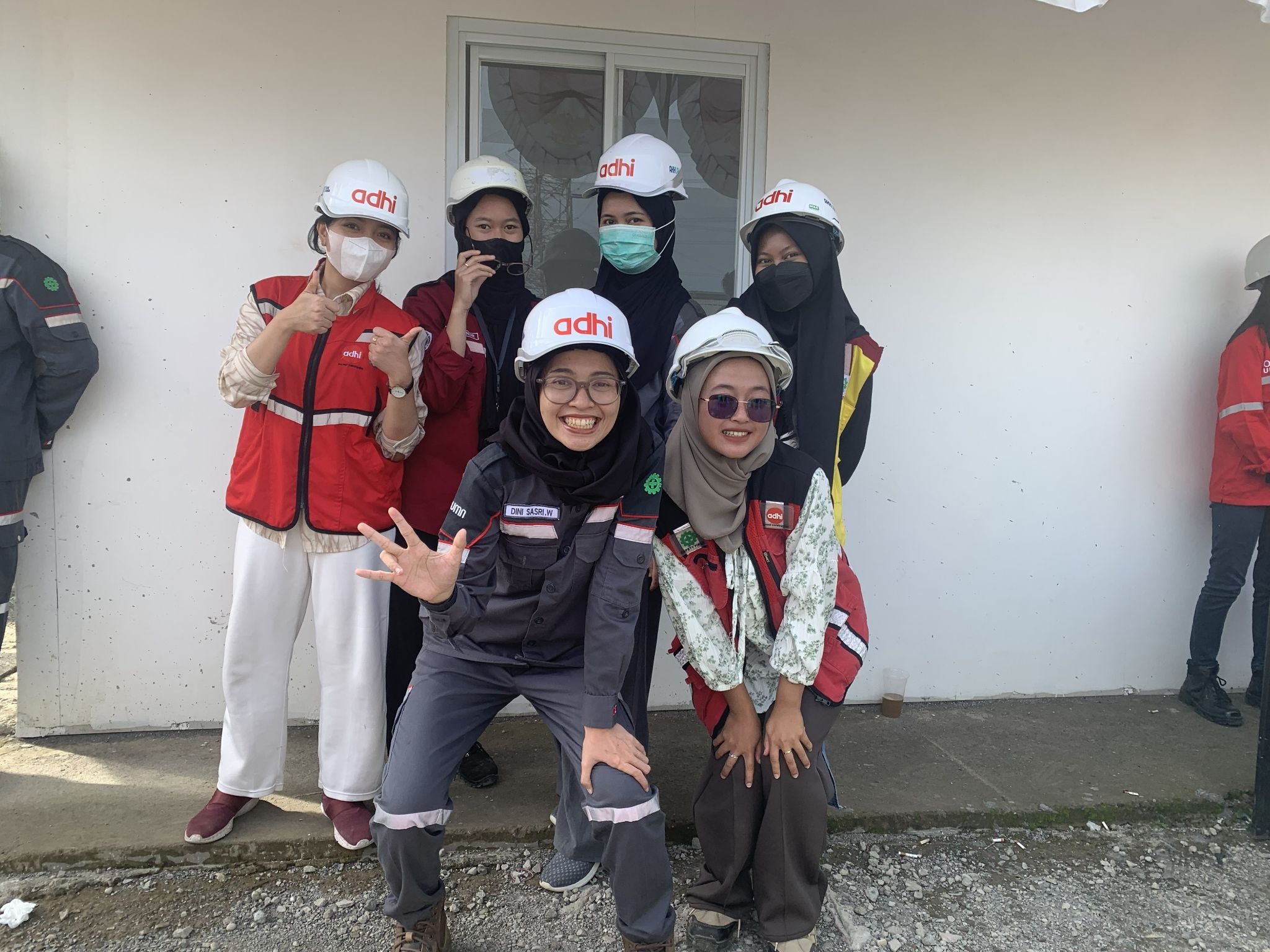
Engineer Dini Sasri Wiyanti is one of those women. As Adhi Karya’s lead engineer, she is driving a project to build a vital energy distribution center for Perusahaan Listrik Negara (PLN), Indonesia’s state power utility. Backed by technical assistance from the Southeast Asia Energy Transition Partnership (ETP) – a programme of the United Nations Office for Project Services – the upgraded JAMALI grid will reliably integrate variable renewable energy to power the lives of 160 million people.
Read our interview with her below, as she delves into her experience overseeing the construction of PLN’s new control centers.
Q: What first drew you to engineering?
For me, engineering is where science finally meets reality. There is something really special about the moment a project moves from a design on a screen to a tangible structure in the real world. It’s a collaborative effort where you’re constantly balancing different perspectives to bring a vision to life. Construction is more than building; it’s also about enriching the community’s experience. Being able to contribute to Indonesia’s power sector feels incredibly rewarding; knowing that our work directly improves the country’s standard of living.
Q: As a woman in a traditionally male-dominated field, what has been your experience navigating the work you do?

This assignment was a turning point for me. It was my first experience leading a major team, and it shaped my approach to collaboration; especially since I had to manage two separate project sites.
In this industry, you’re often the only woman in the room. I had to find the confidence to lead and communicate effectively with a majority-male team. Sometimes work is not only about the engineering; it’s also about the people involved. I’m proud to work for a company that’s actively expanding opportunities for women in STEM, proving that having diverse perspectives is an asset to the project.
Q: What is a recent lesson you’ve learned at work that completely changed how you approach your job?
For a high-pressure project like this, the team needs to be available whenever the client or the company needs us; finding that balance is crucial. My team has leveraged technology to make our workflows more manageable; handling the detailed planning digitally so that our time on-site is as efficient as possible.
This shift has allowed all of us, including myself, to make space for both our personal and professional well-being. I’ve realized that this approach doesn’t just make the project stronger; it makes me a wiser leader by valuing authenticity and mental health as much as I do the final result of our work.
I also find it fascinating to work with Gen-Z team members because they challenge traditional approaches to work-life balance.
Q: For the young women looking at your career today, what is the one thing you want them to know about the impact they can have in the energy transition?

I often think about how narrow the road used to be for women in this sector. Now, I feel like I’m in a position to help widen it so that the path is smoother for those who choose to follow. We bring a different kind of collaboration and innovation to the table.
I’ve realized that when women lead in these spaces, it actually forces the industry to grow.
It’s rewarding to know that my journey is helping the industry become a bit wiser and more open than it was when I first started.
Q: Could you describe your role in the construction and modernization efforts currently happening within the PLN Jamali grid?
Modernizing the PLN Jamali Grid is a complex task, especially when it comes to aligning project delivery with evolving requests. My focus is on translating design into construction; essentially taking the designs that were finalized during the bidding phase and making sure that they work on the ground.
I lead my team in evaluating those designs and translating them into clear, actionable steps. This ensures that everyone (from our site supervisors and clients to our subcontractors) is aligned with the necessary specifications and regulations to get the job done right.

The support we receive from ETP-UNOPS is vital for our quality control. It keeps our contractors accountable by ensuring the initial design standards are strictly met. During their site visits, the ETP team was able to see how we’ve managed various change requests while staying completely aligned with our core project delivery goals. It’s all about maintaining that balance between flexibility and project integrity.
Q: Why is the work on the Main Control Center (MCC) so critical for the stability and efficiency of the Jamali grid?
The Main Control Center is the brain of the entire network and is vital for integrating and controlling the transmission system through SCADA* and Energy Management Software. As Indonesia’s power demands grow year after year, our existing infrastructure simply has to evolve.
Modernizing the Control Center isn’t just a technical upgrade; it’s a necessary renewal to ensure the system remains integrated and resilient enough to handle the increasing load on the grid.
*By linking directly with plant-floor machinery, SCADA software and hardware enable organizations to control industrial operations and track real-time data.

Q: Is there a specific technical milestone in this project that you are particularly proud of achieving?
The project is currently in a very active construction stage, and our primary focus is on completing the final milestones. Managing a project of this scale means staying focused until the very end. I’m really excited for the completion of the project, not only to see the physical results, but to deliver the impact we’ve been working toward for the community.
Construction is currently at 94% completion. While final building work and preparations are underway, several existing systems are already being transferred digitally. Due to the extensive synchronization required between the building infrastructure and SCADA systems, the project is on track to be fully operational by 2027.
Q: If you could summarize your contribution to Indonesia’s energy future in one sentence, what would it be?
Even a single extended hand can help make a difference.
My contribution to work is strengthened by the hands of many people, who transform design into tangible impact through many aspects. I see this collective contribution as the people’s idea of transformation into a self-sustaining energy ecosystem.