As Southeast Asia pushes toward a low-carbon future, the regional energy landscape is shifting rapidly from ambitious commitments to actionable policy and infrastructure. This momentum was on full display in Manila at the 26th ASEAN Energy Business Forum (AEBF-26). Organized by the ASEAN Centre for Energy (ACE) and hosted by the Philippine Department of Energy alongside the 44th ASEAN Ministers on Energy Meeting (AMEM), AEBF-26 served as the premier platform for energy policy, investment, and cross-border collaboration, arriving at a pivotal moment as the region sets its sights on the ASEAN Plan of Action for Energy Cooperation (APAEC) 2026-2030 and the expansion of the ASEAN Power Grid.
For our team, the week was a testament to ETP’s continued commitment to building a sustainable, interconnected, and inclusive regional energy ecosystem. From shaping inclusive workforce policy to launching transformative regional initiatives, here is a look back at ETP’s engagements at AEBF-26.
Placing People at the Heart of the Energy Workforce
The clean energy transition is fundamentally about people. Kickstarting the week’s discussions, ETP’s Head of Regional Programmes (OiC), Fritzie Vergel, took the stage during a panel on integrating Diversity, Equity, and Inclusion (DEI) into energy workforce development.

Drawing from ETP’s ongoing Specialized Workforce Development Frameworks (SWIFT) initiative (which evaluates both supply and demand across Southeast Asia’s energy sector) Fritzie highlighted a critical gap across the region: while ASEAN governments have established ambitious renewable energy targets on paper, national training systems, skill standards, and formal certification mechanisms have not kept pace.
Addressing gender disparities and rural access, Fritzie pointed out that the talent pipeline remains heavily skewed. Women account for roughly 25% of electrical and electronics trainees in the Philippines, while green jobs in Viet Nam are over 80% male. Meanwhile, local community operators such as women’s groups running micro-hydro operations in Indonesia perform vital work but remain excluded from formal skill recognition systems.

Looking toward 2030, ETP advocated for two transformative shifts:
- Creating formal accreditation pathways so informal, rural, and community workers can enter and advance within the formal economy.
- Moving beyond purely technical metrics (GW/MW of capacity) to explicitly incorporate workforce development, training, and inclusion goals into national energy plans.
Expanding Regional Connectivity: The Launch of SCOPE-Energy
Day two marked a major milestone in EU-ASEAN development cooperation with the joint launch of SCOPE-Energy and SCOPE-Investment Facilities; two flagship initiatives funded by the European Union to support regional energy priorities under APAEC 2026-2030.

Led by ETP, SCOPE-Energy is designed to enhance sustainable energy connectivity both within ASEAN and between the region and the EU. Through the ASEAN Power Grid Advancement Programme (APG-AP) and targeted capacity-building for regional energy regulators, the initiative provides the technical framework necessary to advance cross-border power trade and system integration.

A Landmark for Institutional Excellence: Launching the ASEAN School of Regulation
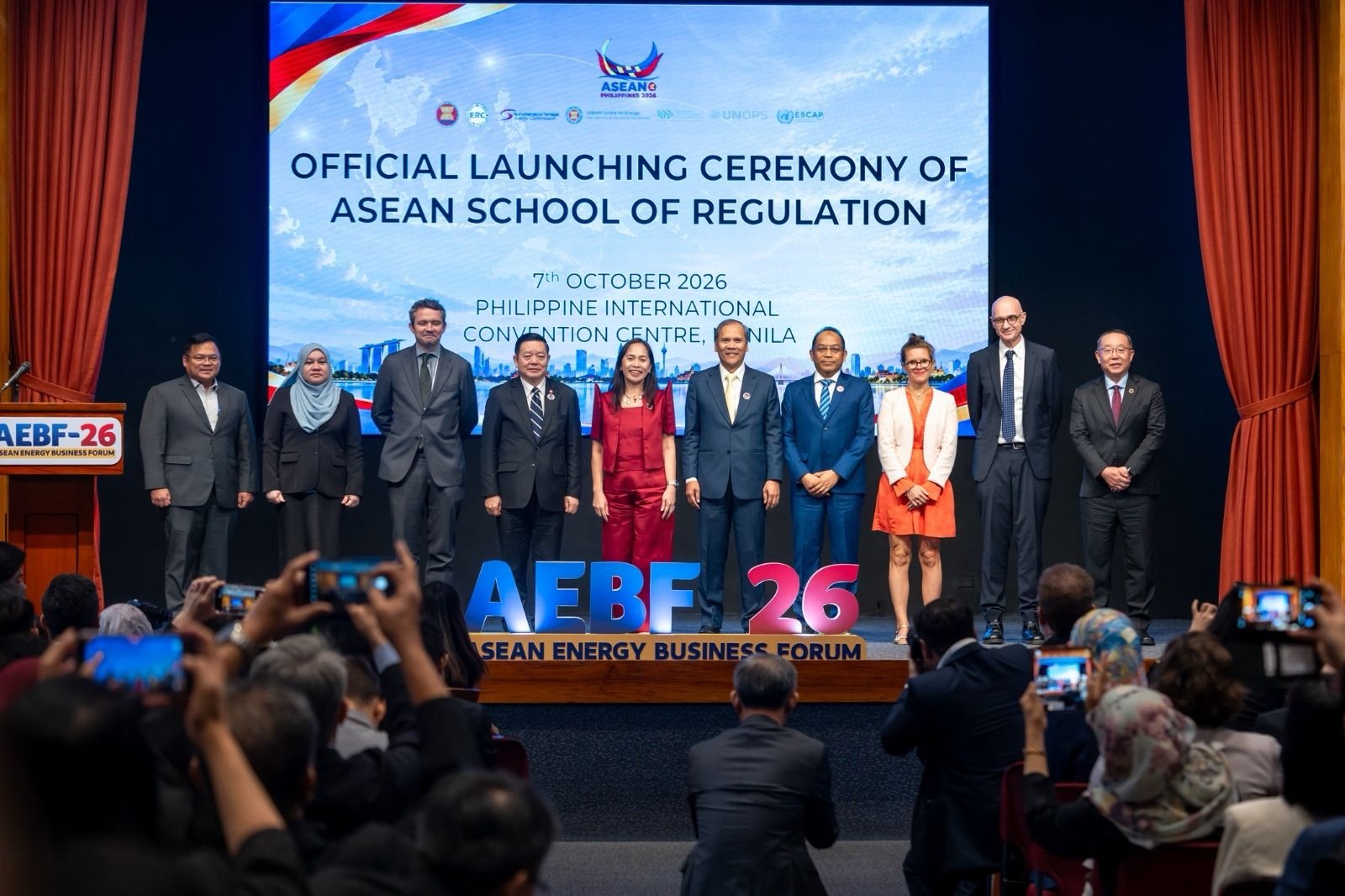
The highlight of the week was the official launch of the ASEAN School of Regulation (ASR) during the 44th ASEAN Ministers on Energy Meeting (AMEM).
Developed through a joint effort by the ASEAN Energy Regulators Network (AERN), ACE, the ASEAN Secretariat, UNOPS ETP, and the United Nations Economic and Social Commission for Asia and the Pacific (ESCAP) with generous funding from Agence Française de Développement (AFD) and SCOPE-Energy, the ASR addresses a critical structural need across the region.
Moving away from one-off, ad-hoc training sessions, the ASR is designed as ASEAN’s dedicated, permanent platform for regulatory capability, peer learning, and institutional excellence. By establishing a sustained regional system to nurture regulatory leaders, retain institutional knowledge, and translate shared expertise into concrete policy, the ASR marks a decisive step toward creating the transparent, harmonized regulatory environment required to build an interconnected, investable ASEAN Power Grid.

Powering Progress Together
From technical workforce frameworks to high-level regulatory institutions, ETP’s activities at AEBF-26 reflect a simple truth: achieving a sustainable energy transition requires alignment across data, policy, financing, and community impact. As ASEAN embarks on its 2026-2030 strategy, ETP remains dedicated to working alongside national governments, regional bodies, and international partners to ensure Southeast Asia’s clean energy future is resilient, interconnected, and truly just.