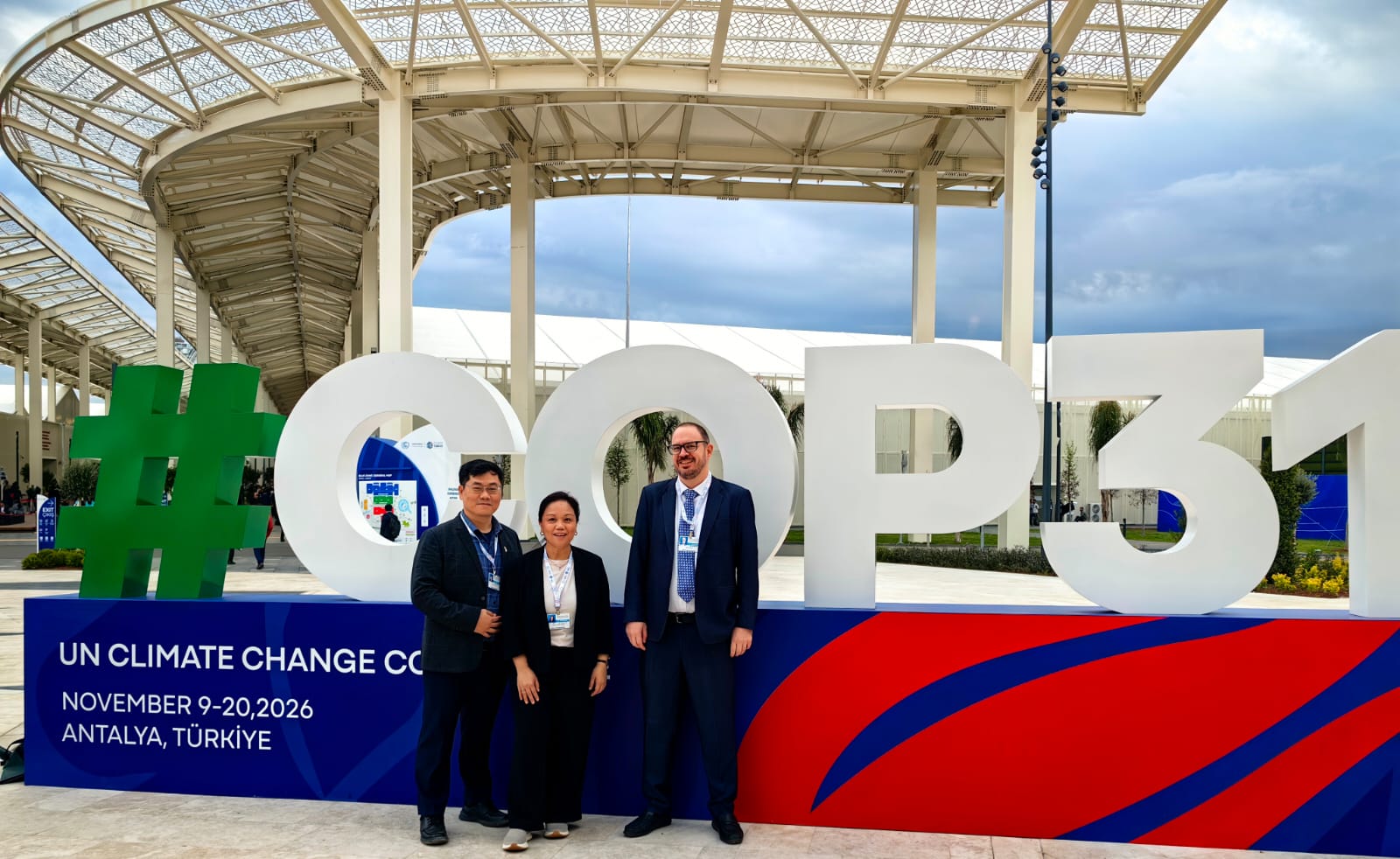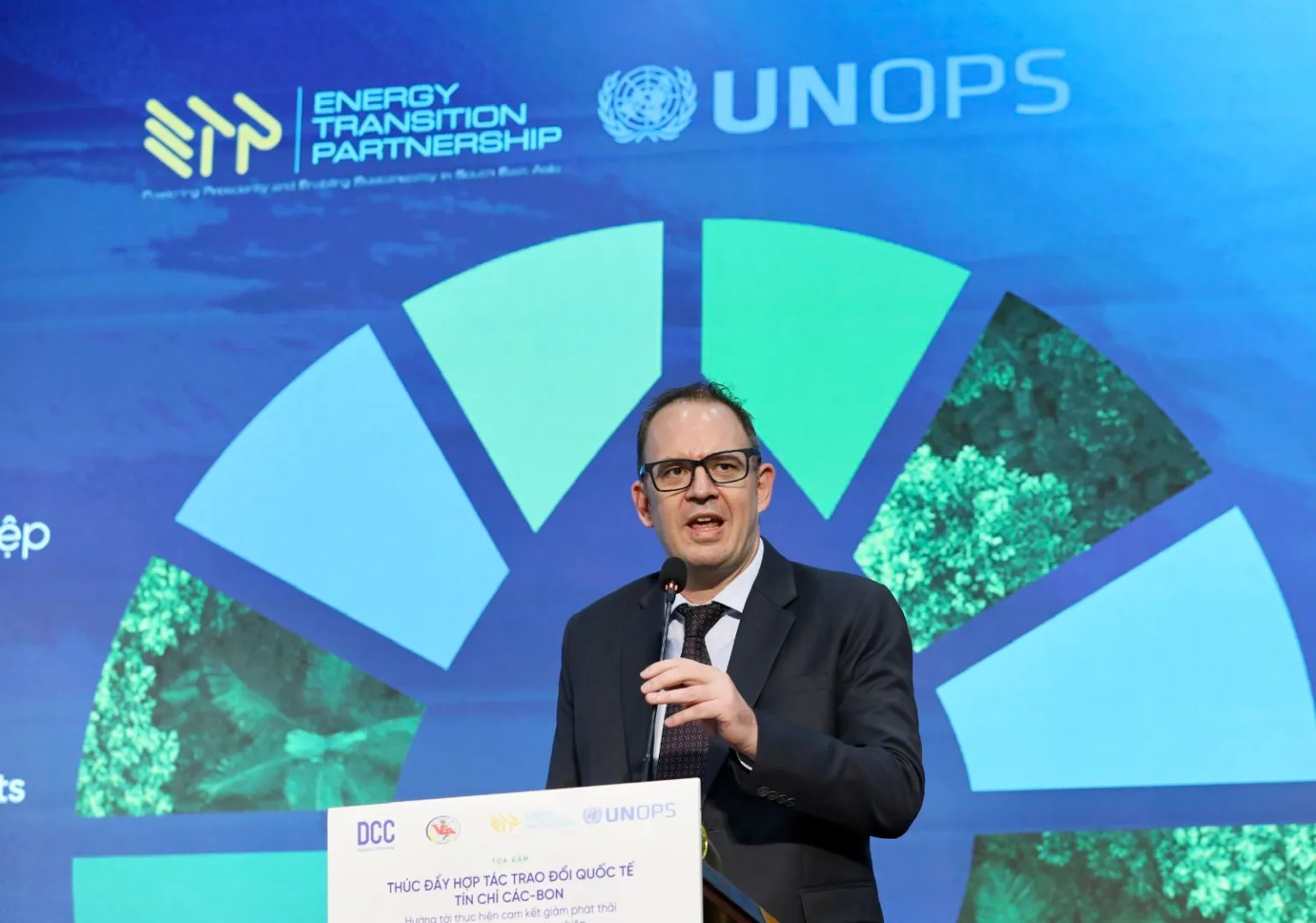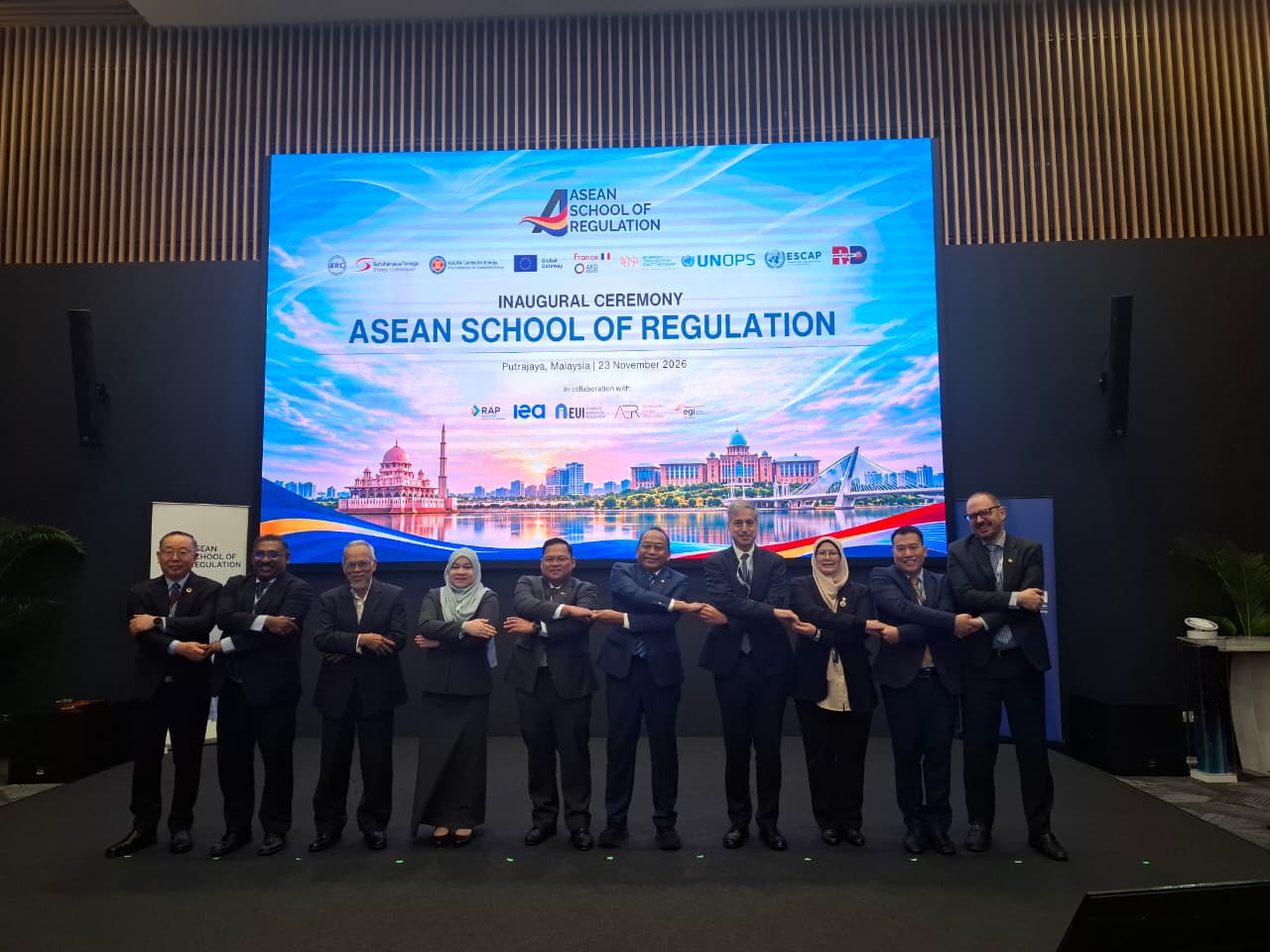
In October 2026, the ASEAN School of Regulation (ASR) received high-level endorsement at the 44th ASEAN Ministers on Energy Meeting (AMEM) in Manila. Building on that momentum, the school officially opened its doors on 23 November 2026 at its permanent home; the National Energy Centre, Universiti Tenaga Nasional (UNITEN) in Putrajaya, Malaysia. The launch of the physical campus marks the ASR’s transition from concept into a permanent, ASEAN-owned regional centre of excellence designed to build regulatory capabilities, promote knowledge sharing, and deepen cooperation among ASEAN Member States.

The establishment of the school comes at a crucial time as Southeast Asia’s energy landscape evolves rapidly. As the region embraces renewable energy, integrates new technologies, and expands cross-border electricity trade, its power systems are becoming increasingly complex. Navigating these shifts (from tariff pricing and market design to grid integration) requires more than physical infrastructure; it demands strong, harmonized regulatory frameworks capable of attracting private investment while keeping power reliable and affordable.
Years in the making, the initiative is led by the Southeast Asia Energy Transition Partnership (ETP), with generous support from the Agence Française de Développement (AFD) and the European Union (EU), alongside key partners including UNESCAP, the Energy Commission of Malaysia (ST), the Energy Regulatory Commission (ERC), and the ASEAN Centre for Energy (ACE). Driven by ETP’s regional programme and developed in close collaboration with regional experts and government representatives, the school first launched as a successful pilot summer programme in 2025 before evolving into the permanent institution inaugurated today.

Bridging the Regulatory Gap for the ASEAN Power Grid
Accelerating the clean energy transition and mobilizing large-scale private capital depend heavily on transparent, predictable policies. As a dedicated regional platform for regulatory leadership, applied research, and practitioner exchange, the ASR will focus on three strategic priorities:
- Regulatory Harmonisation:
Aligning regulatory frameworks and grid codes across ASEAN Member States to facilitate smoother cross-border electricity trade. - Market and Tariff Design:
Strengthening market and tariff frameworks to encourage private sector investment while protecting consumer interests. - Technical Capacity Building:
Delivering practical training in renewable energy integration, grid flexibility, energy storage, and digitalisation.
While Malaysia serves as the physical host, with UNITEN Research and Development (UNITEN R&D) hosting the institution, regional leaders emphasize that the School is a shared asset for all of Southeast Asia.

The joint partnership address featured in-person remarks from His Excellency Marc Abensour, French Ambassador to Malaysia, alongside video messages from key funders AFD Regional Director Victoire Vandeville and Her Excellency Marina Rafti, Ambassador of the European Union to ASEAN.
Speaking at the event, Ambassador Abensour underscored the importance of regional integration and international partnerships. His remarks were echoed by Vandeville, who highlighted the ongoing support of international partners, while Ambassador Rafti emphasized that the school is now, more than ever, firmly in the hands of ASEAN countries.


Kicking Off with the 2026 Summer School
Immediately following the opening ceremony which featured high-level roundtables on institutional sustainability and scaling international investments the ASR launched its flagship 2026 Summer School for Energy Regulators in ASEAN (23–27 November).

The inaugural programme brought together over 30 energy regulators from nine Southeast Asian countries to gain hands-on technical expertise aimed at advancing the ASEAN Power Grid. To ensure world-class instruction, the curriculum was delivered in collaboration with leading global and regional energy institutions, including the Australian Energy Regulator (AER), the International Energy Agency (IEA), the Florence School of Regulation (FSR), Eliga Grid International, and the Regulatory Assistance Project (RAP).

A Coalition of Regional and International Support
The establishment of the ASR reflects a broad coalition of regional leadership and international support. Implemented through the Southeast Asia Energy Transition Partnership (ETP), a multi-donor programme managed by UNOPS and ESCAP, the school is backed by the Agence Française de Développement (AFD) and the European Union (EU). Crucially, its curriculum and research remain anchored to regional realities through close alignment with the Energy Commission of Malaysia (Suruhanjaya Tenaga), the Energy Regulatory Commission (ERC) of the Philippines (as Chair of the ASEAN Energy Regulators’ Network), and the ASEAN Centre for Energy (ACE).

To translate this coalition into action, ETP hosted two roundtables alongside the inauguration to gather candid feedback from ASEAN Member States and gauge future partner commitments. ETP Director John Cotton moderated Investing in Regulatory Capacity for Energy Transition – Building Sustainable Partnerships for the ASEAN School of Regulation and Beyond with AFD Regional Director Victoire Vandeville, ESCAP Energy Division Head Hongpeng Liu, and Florence School of Regulation Professor Alberto Pototschnig.
Meanwhile, ETP Senior Programme Manager Fritzie Vergel led Charting the Ambition of the ASEAN School of Regulation, featuring ERC Chairperson and CEO Hon. Francis Saturnino C. Juan, Suruhanjaya Tenaga CEO Puan Siti Safinah binti Salleh, ACE Executive Director Dato’ Razib Dawood, and UNITEN Deputy Vice-Chancellor Prof. Ir. Dr. Vigna Kumaran A/L Ramachandaramurthy.

With its doors now officially open in Putrajaya, the ASR is poised to equip Southeast Asia’s energy leaders with the tools needed to power a cleaner, more interconnected future.