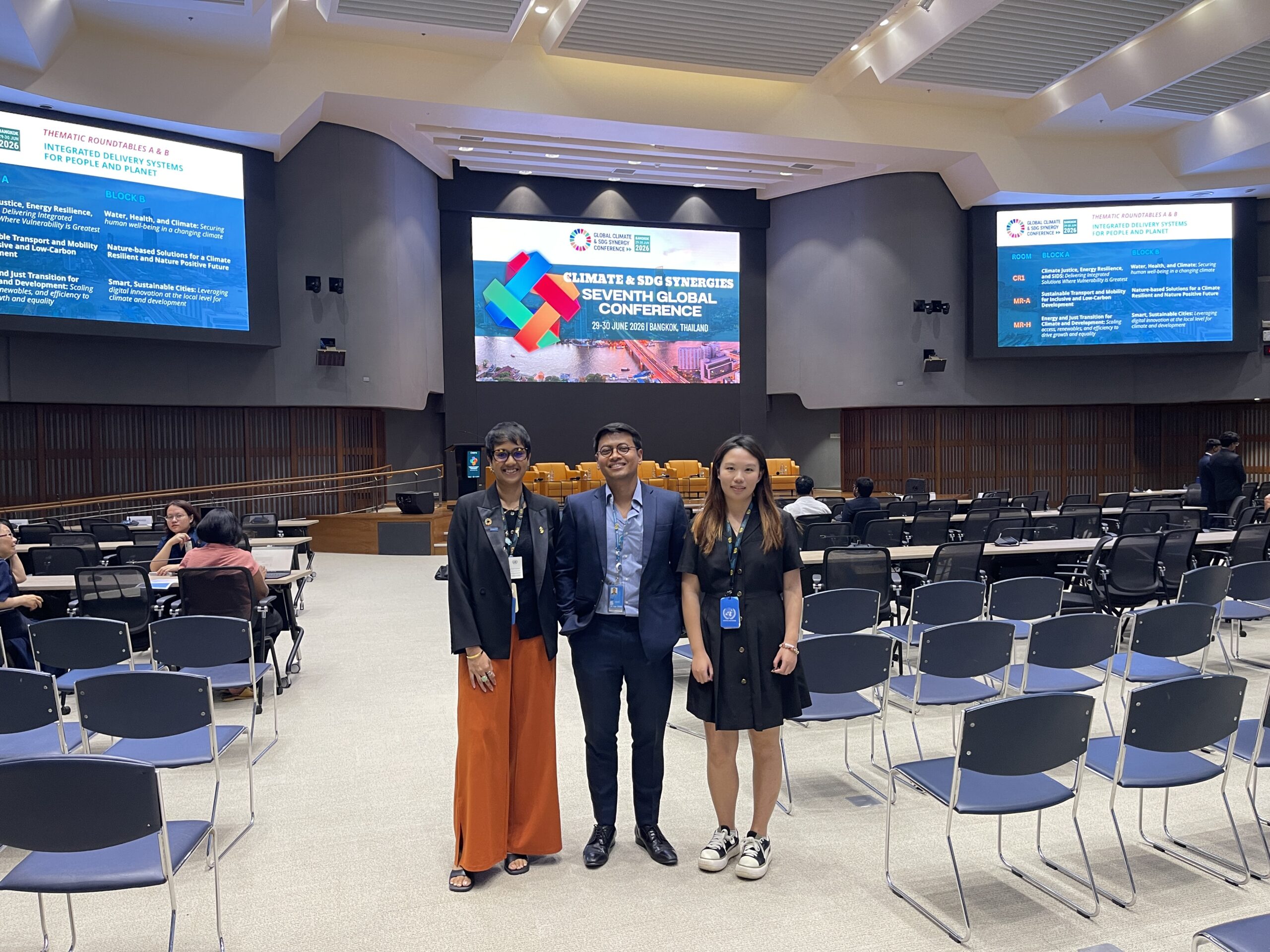
The Seventh Global Conference on Climate and SDG Synergies arrives at a critical moment when global progress toward the Sustainable Development Goals (SDGs) and the Paris Agreement targets is undergoing a period of evaluation. At this juncture for the 2030 Agenda, the event underscored how achieving said targets will rely on high-level synergies into actions on the ground.
Held on 29-30 June, at the United Nations Conference Centre in Thailand the conference brought together global government representatives, policymakers, and experts to support the establishment of practical pathways and accelerate synergies.

Following up from the previous year’s summit – which had a focus on financing goals – this year, the conference turned towards actualizing goals set.
ETP was invited to speak at the thematic roundtable session on “Energy and Just Transition for Climate and Development: Scaling access, renewables, and efficiency to drive growth and equality”. The session examined the critical linkages between sustainable energy, just transition, climate action and development. ETP’s Regional Coordinator, Mr. Dimas Fauzi, attended the session as a panelist.


Echoing the conference’s focus on synergized efforts to achieve SDG 7, Mr. Fauzi emphasized that this goal has long been a priority for ETP. He highlighted ETP’s established partnership models, which actively bridge infrastructure and financing gaps to drive SDG 7 progress across Southeast Asia.
- With bilateral governments: In Indonesia’s JAMALI Control Center project, ETP’s technical assistance for the detailed engineering design helped PLN unlock $600 million in Results-Based Lending from the ADB.
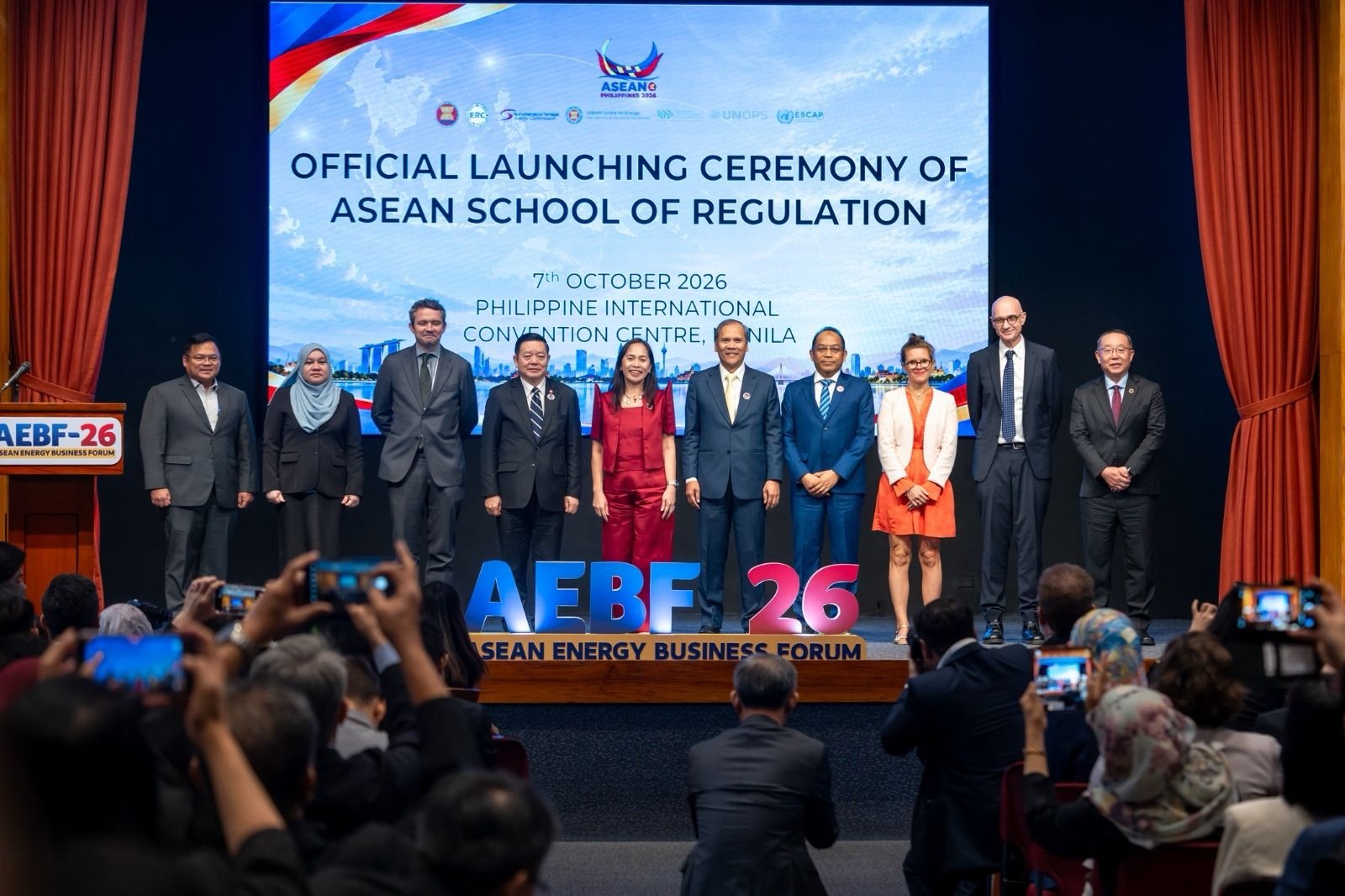
- With regional institutions: ETP provides technical assistance for the ASEAN Power Grid to enable cross-border power trade and, with ESCAP and ASEAN, supports the establishment of a capacity-building platform for regional energy regulators, the ASEAN School of Regulation.
- With ‘VIP’ countries: ETP holds initiatives like the SPARK policy dialogue to foster peer-to-peer learning among senior policymakers, opening up collaboration potentials.
Mr. Fauzi also outlined operational lessons which maximize ETP’s impact, including the bottom-up approach, country liaison, and coordination and collaboration among development partners.
The panel transitioned into discussions on youth involvement in the 2030 Agenda, rethinking our approach to working with “last-mile” communities, and navigating scenarios from Small Island States. The examples shared were both encouraging and insightful, while serving as a stark reminder of the long road ahead.